


Commercial Evaporative Air Cooler
Commercial Evaporative Air Coolers for Businesses
In the intense heat of dry climates, businesses face challenges keeping outdoor spaces comfortable for customers and employees. Imagine a bustling restaurant patio in Phoenix where heat drives patrons away. A commercial evaporative air cooler provides an effective solution, using water evaporation to lower temperatures without the high costs of traditional air conditioning.
These swamp coolers, or industrial evaporative coolers, operate on the simple principle of evaporative cooling units drawing in warm air and passing it over water-soaked pads, reducing temperatures by up to 30 degrees. Unlike smaller residential models, commercial versions offer greater scale and durability for demanding environments like warehouses and events. According to the U.S. Department of Energy, they consume about 75% less energy than compressor-based systems, making them ideal for Southwest regions. This introduction explores eight key aspects: operation, benefits, costs, industrial applications, and maintenance tips.
At Cool-Off, we specialize in complementary cooling technologies, such as misting systems phoenix, to enhance business comfort. To start, how exactly does a commercial evaporative air cooler function in real-world settings?
1. How They Cool Outdoor Areas
Outdoor spaces like patios and loading docks often face intense heat, challenging businesses to keep employees and customers comfortable without high energy costs. A commercial evaporative air cooler offers an efficient solution by harnessing the natural evaporative cooling process to lower temperatures effectively.
We explain how these systems work: A powerful fan draws in hot, dry outdoor air through specially designed pads saturated with water by an internal pump. As air passes over the moist pads—often called a swamp cooler—water evaporates, absorbing heat from the air and dropping temperatures by up to 30°F in dry conditions, according to the U.S. Department of Energy. The cooled air is then circulated by the fan into the space, providing relief over areas up to 2,000 square feet. Key components include water pumps for continuous pad moistening, filters to maintain air quality, and durable fans scaled for industrial use in manufacturing settings.
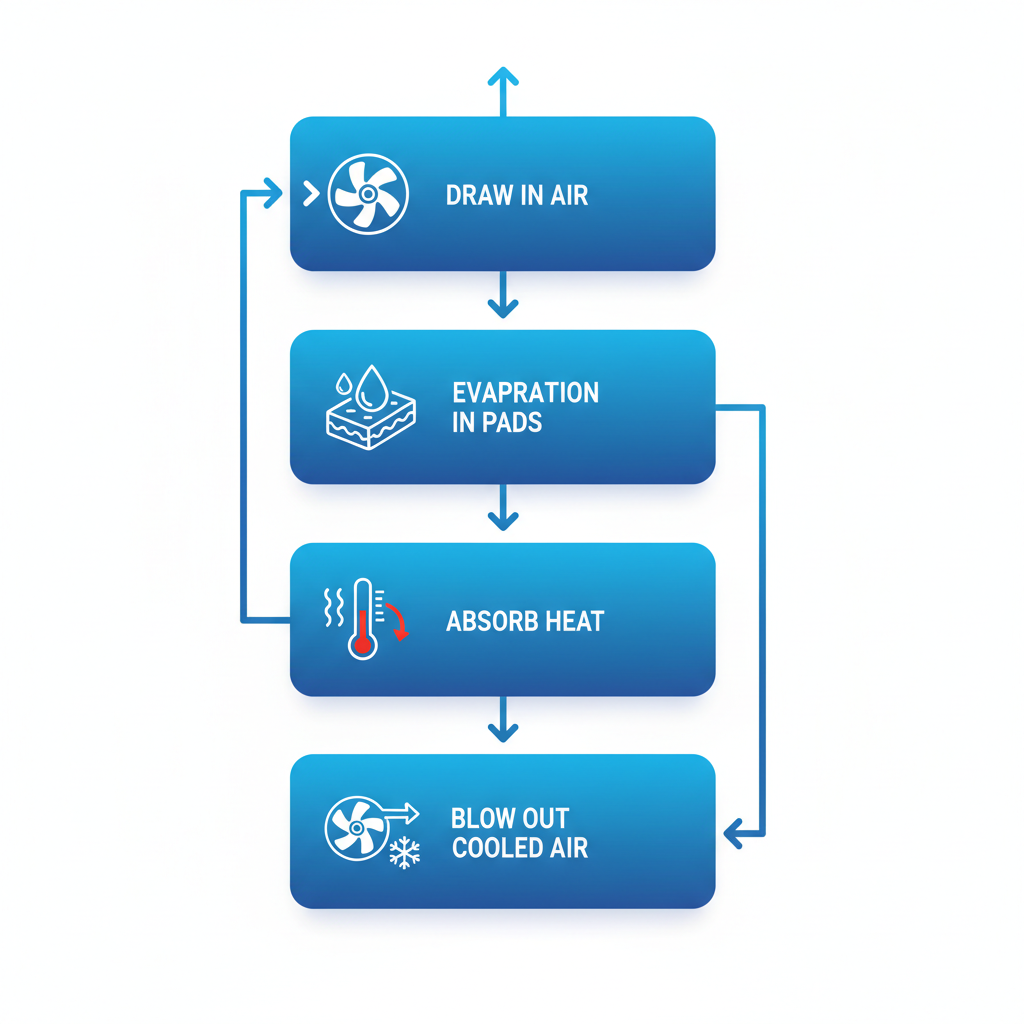
Diagram of evaporative cooling process for outdoor commercial spaces
For optimal results, place outdoor swamp units near high-traffic patios in arid regions. Businesses can enhance this with our mid pressure misting fans, combining evaporation and mist for even greater cooling in spaces like Houston, Texas.
2. Advantages in Arid Regions
In arid regions like Phoenix, Arizona, businesses face intense dry heat that limits outdoor productivity and customer comfort. We highlight these gains from commercial evaporative air coolers, which thrive in low-humidity environments to deliver superior cooling without added moisture burdens.
These dry climate coolers achieve 20-30°F temperature drops through maximal water evaporation, as supported by AMCA standards for airflow efficiency in low-humidity conditions. Unlike traditional AC units, swamp coolers reduce energy bills by up to 80%, promoting sustainability while naturally filtering dust and pollutants for better air quality. Arid evaporative units scale easily for commercial patios or events, ensuring consistent ventilation per AMCA guidelines. Our mid pressure misting fans provide similar arid efficacy, enhancing overall system performance.
For Southwest businesses in Las Vegas, Nevada, integrating these with shade sails maximizes cooling. This approach not only cuts costs but also extends outdoor usability, aligning with energy-efficient practices.
3. Pricing for Commercial Needs
When businesses evaluate a commercial evaporative air cooler for outdoor or industrial spaces, cost is a primary concern. We break down the numbers to show how these systems deliver effective cooling without breaking the bank, especially in dry climates where evaporative technology shines.
Upfront costs for an industrial evaporative cooler range from $500 to $5,000 per unit, depending on size and capacity for warehouses or patios. Installation adds $200 to $500, often straightforward for our mid-pressure booster-pump kits. Running expenses stay low at under $0.05 per hour for electricity and water, far below traditional AC units. Over time, businesses save 50-70% on energy bills compared to compressor-based systems, aligning with ASHRAE energy benchmarks for sustainable HVAC.
For example, a mid-sized warehouse might invest $2,000 in a high pressure misting fan kit, yielding ROI in one season through reduced utility costs. Calculate yours by dividing annual savings (e.g., $1,200) by upfront evaporative unit expenses.
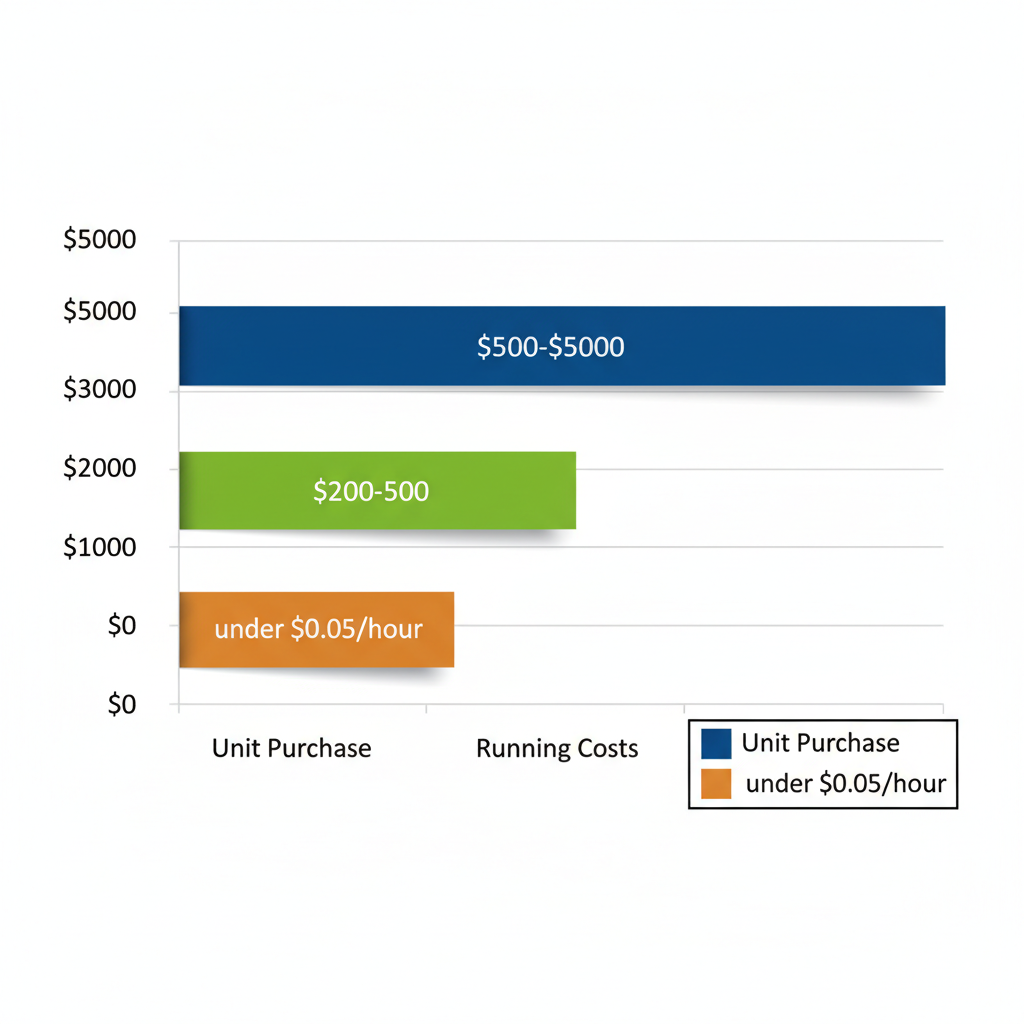
Visual breakdown of costs for business misting fans and systems
These scalable options make business cooling costs manageable while enhancing comfort in high-demand settings.
4. Suitability for Factories
Factories and manufacturing plants often face intense heat from machinery and processes, challenging worker comfort and productivity. We see commercial evaporative air coolers thriving in these environments, delivering effective ventilation and cooling without the need for complex ductwork. These factory cooling systems address high-heat zones, ensuring safer, more comfortable workspaces.
Industrial evaporative coolers excel in large facilities covering 5000 square feet or more, with portable units offering flexibility for spot cooling near production lines and fixed installations providing sustained coverage across expansive areas. Their dust-resistant designs handle the gritty conditions of manufacturing evaporative units, maintaining efficiency over time. As noted in the Energy.gov Evaporative Coolers Guide, these systems deliver impressive airflow—up to 20,000 cubic feet per minute—ideal for industrial ventilation. For enhanced performance, we recommend hybrid solutions pairing them with our high pressure misting fans, combining evaporation with fine mist for superior cooling in dusty or humid conditions. Safety is paramount; always position units away from electrical hazards and follow manufacturer guidelines to prevent overcooling or moisture buildup.
For optimal warehouse placement, position industrial evaporative coolers near entry points or assembly areas to maximize airflow circulation. This strategic setup can reduce ambient temperatures by 15-20 degrees Fahrenheit, boosting efficiency while minimizing energy costs. Regular checks ensure longevity and compliance with safety standards.
5. Selecting Industrial Models
Selecting the ideal commercial evaporative air cooler for industrial use presents a common dilemma for businesses seeking reliable cooling without excessive energy costs. We guide you through key factors to ensure optimal performance in demanding environments, balancing efficiency and adaptability to meet your operational needs.
When choosing, first assess sizing based on square footage and local humidity levels, as higher humidity reduces evaporative efficiency. Compare portable versus permanent installations: portables offer flexibility for varying layouts, while permanents provide consistent coverage in fixed spaces. Evaluate CFM ratings using AMCA standards, which certify fan performance metrics for reliable airflow—aim for at least 2,000 CFM per 1,000 square feet to maintain comfort. Prioritize durable materials like galvanized steel or UV-resistant plastics to withstand harsh industrial conditions. For business evaporative picks, consider industrial swamp options that integrate seamlessly with existing ventilation. We recommend our low pressure misting fans for versatile cooling solutions.
A pro tip for portability: Opt for swamp coolers with wheeled bases and quick-setup designs, allowing easy relocation during peak heat or maintenance. This approach enhances flexibility, reducing downtime and adapting to evolving industrial workflows while supporting long-term efficiency.
6. Versus Traditional AC
When evaluating cooling options for industrial spaces, we at Cool-Off often compare our commercial evaporative air coolers—commonly known as swamp coolers—to traditional air conditioning systems. This contrast reveals significant advantages in efficiency and practicality for large, open environments.
Evaporative cooling relies on water evaporation without refrigerants or compressors, unlike traditional AC units that require complex machinery and sealed rooms for optimal performance. Installation is simpler for swamp coolers, as they need no extensive ductwork, reducing setup time and costs according to ASHRAE guidelines on energy-efficient systems. Maintenance is lower too, with fewer moving parts, and they excel in dry climates by using up to 75% less energy than compressor-based AC, per ASHRAE standards. This makes evaporative vs compressor cooling ideal for warehouses where air circulation is key.
For a bustling warehouse in Phoenix, an industrial evaporative cooler provides effective cooling without the high operational expenses of AC, ensuring worker comfort while aligning with sustainability goals. We recommend assessing your space's openness to determine the best fit.
7. Upkeep Essentials
Proper maintenance of commercial evaporative air coolers ensures optimal performance and longevity, especially in demanding business environments like warehouses or outdoor patios in Houston. We at Cool-Off emphasize routine care to prevent downtime and extend equipment life, reducing operational costs for our industrial evaporative cooler users.
To maintain your swamp cooler effectively, follow these steps. Clean cooling pads monthly by removing debris and mineral buildup, as recommended by Energy.gov guidelines for evaporative systems. Flush water lines bi-weekly to avoid clogs and bacterial growth. Inspect fan blades quarterly for balance and wear, ensuring quiet operation. For winter preparation, drain all water from the system to prevent freezing damage. We recommend professional servicing annually to check electrical components and optimize efficiency. Our easy-maintenance nozzles simplify cleaning, minimizing effort while maximizing cooling output.
A seasonal checklist includes verifying pad integrity in spring, testing pump pressure in summer, and storing the unit dry in fall. These cooler care routines keep your commercial evaporative air cooler running smoothly year-round, supporting reliable business cooling.
8. Portable Choices Available
We recognize the need for flexible cooling solutions in dynamic environments like events and temporary industrial sites. Portable commercial evaporative air coolers offer unmatched mobility, allowing businesses to deploy cooling precisely where required without permanent installations. These swamp coolers excel in versatility, providing immediate relief in spaces up to 1000 square feet.
Key features include lightweight designs with wheels for easy transport, along with battery or solar power options for off-grid operation. According to AMCA standards, certified models achieve high mobility ratings, ensuring reliable performance in varying conditions. Top-rated industrial evaporative coolers, such as those from leading manufacturers, receive praise for their energy efficiency and quiet operation in user reviews, with coverage extending effectively across medium-sized venues. Businesses can purchase these mobile evaporative solutions directly from our online store at Cool-Off, with shipping available across the US, including options in Phoenix, Arizona, and Houston, Texas.
For outdoor events, position business portable coolers near seating areas to enhance attendee comfort during hot afternoons. This setup not only cools effectively but also promotes a welcoming atmosphere. Explore our selection today to find the ideal portable cooler for your next project.
Optimizing Business Cooling
In conclusion, commercial evaporative air coolers offer a smart, water-efficient alternative for cooling businesses in dry climates, leveraging the natural process of evaporation to deliver fresh air without the energy demands of traditional systems. As swamp coolers, these industrial evaporative coolers excel in arid regions like the Southwest US, providing versatile applications from warehouses to outdoor patios while ensuring simple maintenance routines.
Key takeaways include significant cost savings—up to 75% on energy bills per ASHRAE efficiency standards—and their adaptability for various commercial setups. These efficient business coolers address common queries on benefits, installation, and upkeep, promoting sustainable arid climate solutions.
We encourage you to assess your space's cooling needs and explore integrations with misting systems for enhanced performance. Contact our experts today to optimize your business environment.