
From Seedlings to Success: The Benefits of Greenhouse Misting Systems
Posted: April 23, 2025 | Categories: misting solutions | Tags: misting solutions

From Seedlings to Success: The Benefits of Greenhouse Misting Systems

Misting systems for greenhouses are essential tools that help create optimal growing conditions by regulating temperature and humidity levels. These systems can reduce greenhouse temperatures by up to 30°F while maintaining ideal moisture levels for plant growth.


Quick Answer: Benefits of Greenhouse Misting Systems

  • Reduces temperatures by up to 25-30°F through evaporative cooling
  • Creates fine water droplets that increase humidity without soaking plants
  • Promotes successful seed germination and cutting propagation
  • Energy efficient, using only about 250 watts of electricity per hour
  • Prevents plant stress from excessive heat or low humidity
  • Helps prevent disease spread when properly maintained

Maintaining the perfect growing environment is one of the biggest challenges greenhouse owners face. Too hot, and your plants wither. Too dry, and seedlings fail to thrive. This delicate balance becomes even more critical during propagation stages when young plants are most vulnerable.

A high-quality misting system solves these problems by mimicking natural rainfall in a controlled way. Unlike traditional irrigation methods, misting systems deliver a gentle, continuous supply of fine water droplets that cool the air through evaporation while providing just the right amount of moisture.

"Greenhouse misting is not only for providing moisture but also for significantly lowering temperatures, with potential drops of up to 25°F," notes one industry expert. This dual functionality makes misting systems particularly valuable for year-round growing operations.

Modern greenhouse misting systems operate between 15-70 psi and can be customized to suit different plant types and greenhouse sizes. High-pressure systems (around 1000 PSI) create an ultra-fine fog ideal for humidity control, while lower pressure systems produce larger droplets better suited for watering.

For greenhouse owners struggling with temperature fluctuations, inconsistent humidity, or seedling propagation challenges, a properly designed misting system offers an efficient, sustainable solution that promotes plant health while conserving water and energy.

Infographic showing the components and benefits of greenhouse misting systems, including temperature reduction capability, water efficiency metrics, optimal pressure ranges (15-70 psi), humidity control percentages (up to 95% without condensation), and different application scenarios for seedlings versus mature plants - misting systems for greenhouses infographic

Understanding Misting Systems for Greenhouses

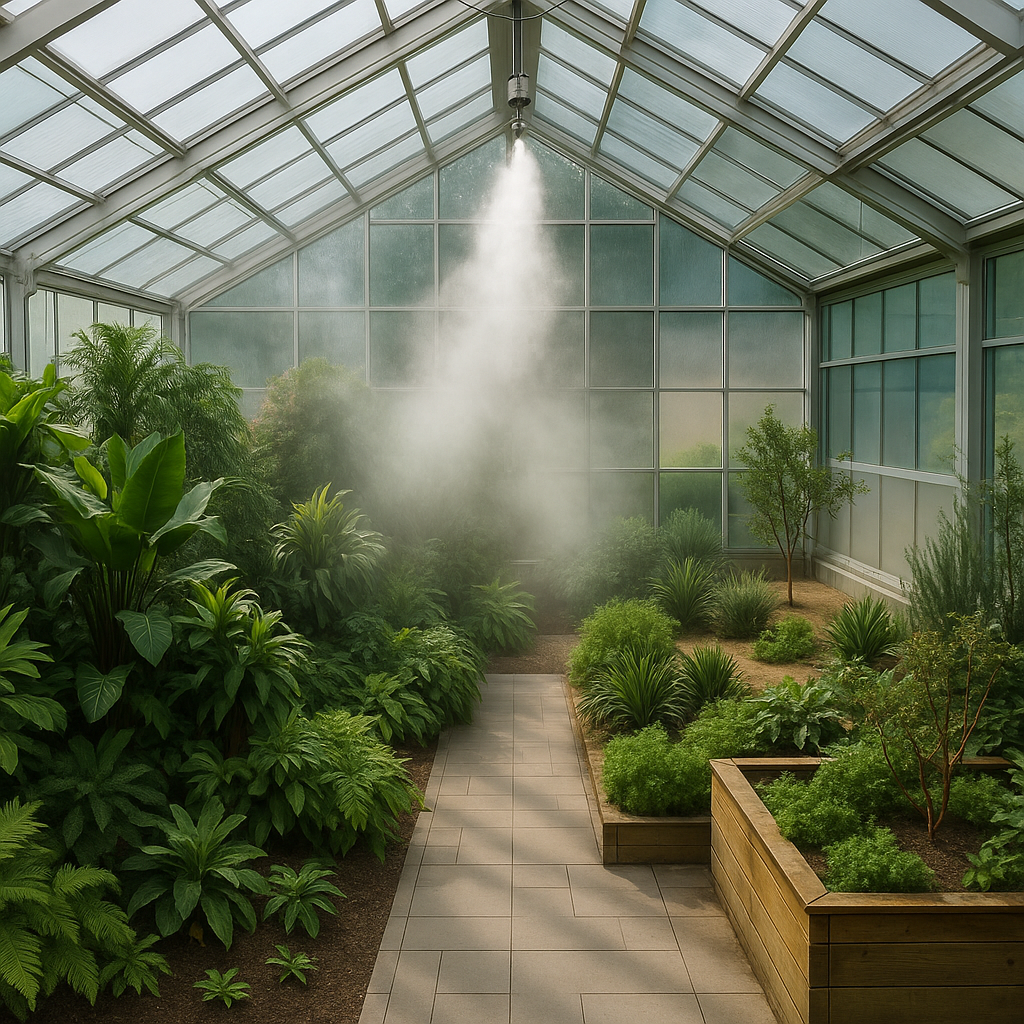
Ever walked through a light summer rain and felt instantly refreshed? That's essentially what misting systems for greenhouses do for your plants! These clever setups bring the perfect balance of moisture and cooling to create plant paradise, no matter what the weather's doing outside.

misting system components - misting systems for greenhouses

At their heart, greenhouse misting systems are surprisingly simple. They use a water source, pump, tubing, and specially designed nozzles to create a fine spray that mimics nature's gentle touch. When those tiny water droplets hit the warm greenhouse air, they evaporate and cool everything down – just like your skin feels cooler after a light mist.

A complete misting system brings together several key components working in harmony. You'll need clean water (often filtered to prevent clogging), a reliable pump to create pressure, tubing to distribute the water, and those all-important nozzles that transform ordinary water into a cooling mist. Most systems also include timers or controllers so you can set it and forget it, letting your plants get exactly the right amount of moisture at just the right times.

What makes these systems truly shine is their versatility. Whether you're nurturing a small hobby greenhouse or managing a commercial growing operation, the same principles apply – just at different scales. The beauty is in the simplicity!

How Misting Systems for Greenhouses Regulate Climate

The magic of misting systems for greenhouses happens through a fascinating bit of science. When water transforms from liquid to vapor, it absorbs heat energy from its surroundings – this is evaporative cooling at work, and it's incredibly effective.

In practice, this means your greenhouse can become dramatically cooler – up to 30°F cooler in dry conditions – simply by adding a fine mist to the air. It's like nature's air conditioning, but without the electricity bill!

"My tomatoes were struggling in the summer heat until I installed a misting system," shares home gardener Maria. "Now they're thriving even when temperatures outside climb into the 90s."

Beyond cooling, these systems create the perfect humidity levels that many plants crave. Think about tropical plants in their native environments – they evolved with consistent moisture in the air. Your misting system recreates this ideal environment, helping plants develop stronger roots and healthier foliage.

For propagation specifically, maintaining the right humidity is absolutely critical. According to research from the University of Massachusetts, "Mist and fog systems maintain high humidity around cuttings while allowing for adequate air circulation and light penetration," which dramatically improves success rates when rooting cuttings or germinating delicate seeds.

What's particularly clever about these systems is how they adapt to different environments. In dry Arizona, a misting system might run frequently to maintain humidity, while in humid Florida, it might focus more on strategic cooling during the hottest parts of the day.

Differences Between Misting, Fogging, and Sprinkler Systems

Choosing the right water system for your greenhouse is like picking the perfect tool for a job – they might look similar, but the results can be dramatically different! Misting systems for greenhouses sit in a sweet spot between heavy sprinklers and ultra-fine foggers, making them incredibly versatile for most growing situations.

System Type Droplet Size Pressure Range Best For Water Usage
Misting Medium (20-100 microns) 15-70 psi General purpose, seedlings, cuttings Moderate
Fogging Very fine (5-20 microns) 500-1500 psi Humidity control, cooling Low
Sprinkler Large (100+ microns) 20-50 psi Larger plants, overall watering High

Misting systems create that "just right" droplet size that provides moisture without drenching your plants. Operating at comfortable pressures between 15-70 psi, they deliver gentle, consistent hydration that's perfect for delicate seedlings and cuttings. They're the greenhouse equivalent of a versatile chef's knife – useful in almost any situation!

Fogging systems are the specialists of the water world. They operate at much higher pressures (often 1000 PSI or more) to create tiny droplets that can actually hang in the air like a cloud. While they're amazing for increasing humidity and cooling, they're not designed for direct watering. As greenhouse consultant Jake Williams puts it, "Foggers create an environment, not irrigation."

Sprinkler systems are the workhorses – delivering larger water droplets that give established plants a good drink. They're less precise but cover more ground quickly. Think of them as the garden hose of greenhouse systems – great for established plants that need a thorough soaking.

"I learned this difference the hard way," laughs hobby grower Sam. "I tried using a sprinkler system for my orchid seedlings and practically washed them away! Switching to a gentle misting system saved my entire crop."

Many commercial growers actually combine these systems – using misters for propagation areas, foggers for humidity control in specific zones, and sprinklers for mature plants. It's all about matching the right water delivery to what your plants need at each stage of growth.

The best part? Today's systems are more affordable and user-friendly than ever. Cool-Off's patented micro-jet nozzle technology, for instance, creates the perfect droplet size for effective cooling while using remarkably little water – a win for both your plants and your water bill!

The Benefits of Misting Systems in Greenhouses

When it comes to creating the perfect growing environment, misting systems for greenhouses offer advantages that go far beyond simply watering your plants. These versatile systems transform your greenhouse into a finely-tuned ecosystem where plants can truly thrive.

greenhouse plants thriving under misting system - misting systems for greenhouses

"Greenhouse mist cooling systems offer both cooling and watering benefits, essential for optimal plant growth," explains a horticulture specialist with over 20 years of experience. This dual functionality is what makes these systems so valuable – they're not just watering your plants, they're creating an environment where everything from delicate seedlings to mature plants can flourish.

The magic happens when those tiny water droplets meet the greenhouse air. As they evaporate, they pull heat away from your plants, creating a cooling effect that can make a dramatic difference during hot weather. At the same time, they maintain just the right humidity level that many plants crave.

Many greenhouse owners are surprised to find how much healthier their plants become after installing a proper misting system. The consistent moisture and temperature levels reduce plant stress, allowing them to direct more energy toward growth and development. You'll likely notice stronger stems, more vibrant foliage, and improved flowering or fruiting.

Beyond plant health, there's the practical side too. Modern misting systems for greenhouses are remarkably efficient with both water and energy. They deliver moisture precisely where it's needed without the waste associated with traditional irrigation methods. And compared to running energy-hungry air conditioning systems, the cooling power of evaporation is a bargain.

Perhaps most impressive is how these systems can extend your growing seasons. By maintaining ideal conditions even during challenging weather, you can start earlier in spring, continue later into fall, and in many cases, grow through summer heat that would otherwise make greenhouse cultivation impossible.

Enhancing Seedling Propagation

If you've ever tried propagating seedlings or cuttings, you know just how delicate that early stage of plant life can be. This is where misting systems for greenhouses truly shine, creating the perfect nursery for your plant babies.

seedlings under a misting system - misting systems for greenhouses

Young seedlings face a challenging transition. They need to establish roots while maintaining adequate moisture, all without being drowned or dried out. It's a delicate balance that's nearly impossible to maintain with manual watering, especially if you're growing in quantity.

The gentle mist created by these systems provides consistent humidity around your seedlings without saturating the soil. This is crucial because seedlings often absorb moisture through their leaves before their root systems are fully developed. The fine droplets create a protective microclimate that encourages root development while preventing the moisture stress that can quickly kill young plants.

"The constant release of fine water droplets benefits delicate seedlings in ways that traditional irrigation simply cannot match," notes one propagation specialist. Those tiny droplets settle gently on leaves and soil without disturbing delicate roots or washing away your growing medium.

Temperature management is another crucial benefit for seedlings. Young plants are particularly vulnerable to heat stress, which can stunt growth or kill them outright. The cooling effect of a misting system helps maintain the consistent temperatures that seedlings crave.

The proof is in the results. Commercial growers using proper misting systems report propagation success rates up to 35% higher than with manual methods. Home gardeners often share similar experiences – one Cool-Off customer mentioned being able to successfully propagate varieties that had previously failed when using hand-watering techniques.

For cuttings specifically, the benefits are even more pronounced. Without established roots, cuttings rely entirely on leaf absorption for moisture. A misting system creates the perfect environment for them to develop roots without drying out in the process.

Energy and Water Efficiency

Resource conservation matters – both for environmental reasons and for your bottom line. Misting systems for greenhouses deliver impressive efficiency on both water and energy fronts.

Let's talk water first. Traditional irrigation methods often waste significant amounts of water through runoff, evaporation before reaching plants, or simply applying more water than plants can use. A well-designed misting system takes a completely different approach, delivering moisture in precisely the amount needed, exactly where it's needed.

The numbers tell the story: conventional irrigation might use between 0.5-1 gallon per square foot daily, while a properly calibrated misting system can reduce this to 0.1-0.3 gallons per square foot – all while achieving better results. For even a modest 1,000 square foot greenhouse, that's a potential savings of hundreds of gallons every day.

Energy efficiency is equally impressive. "Evaporative cooling is remarkably energy and water efficient, with a small water pump using about 250 watts of electricity per hour," notes an industry report. Compare that to traditional air conditioning systems that might consume 3,500 watts or more to cool the same space, and the savings become substantial.

A commercial grower who installed one of our systems shared: "We've cut our water usage by nearly 60% while maintaining better growing conditions. The energy savings compared to our previous cooling methods have been significant enough that the system paid for itself within a single growing season."

Modern systems improve these efficiencies even further with features like:

Smart controls that activate only when conditions require it, preventing unnecessary operation Zoned delivery that targets specific areas based on plant needs Precision nozzles that optimize droplet size for maximum effectiveness with minimum water use Solar power options for off-grid operation or supplementary energy

These efficiencies translate directly to cost savings, making misting systems not just environmentally responsible but economically advantageous for greenhouse operations of all sizes.

Disease and Pest Prevention

When it comes to plant health, prevention is always better than treatment. Properly implemented misting systems for greenhouses can play a significant role in your disease and pest management strategy – though it's important to understand both the benefits and potential challenges.

The primary disease prevention benefit comes from reduced plant stress. Just like humans, plants under stress become more susceptible to illness. By maintaining optimal temperature and humidity conditions, misting systems help strengthen plants' natural defense mechanisms.

Unlike overhead sprinklers that can leave foliage wet for extended periods – a recipe for fungal problems – properly calibrated misting systems provide moisture without creating the prolonged leaf wetness that many pathogens need to thrive. The difference is subtle but important: microscopic droplets that create humidity in the air versus larger droplets that sit on leaves for hours.

"Since installing our misting system with automated controls, we've seen a noticeable decrease in powdery mildew issues that previously plagued our operation during seasonal transitions," reported one greenhouse manager in Houston. This experience is common, as consistent environmental conditions help prevent the fluctuations that often trigger disease outbreaks.

When it comes to pests, certain troublemakers like spider mites actually prefer hot, dry conditions. By maintaining appropriate humidity levels, your misting system can make the environment less hospitable to these unwanted visitors. At the same time, many beneficial insects prefer moderate humidity levels, so your system may actually support the good bugs that help control the bad ones.

It's worth noting that balance is crucial here. As one plant pathologist explains, "The goal is to maintain relative humidity between 50-70% in most greenhouse environments. Below this range, plants experience stress; above it, disease pressure increases." This is why proper system design and integration with ventilation is so important.

At Cool-Off, we recommend viewing your misting system as part of a comprehensive approach to plant health. When properly integrated with good air circulation, appropriate plant spacing, and regular monitoring, these systems can significantly reduce both disease pressure and pest problems – often reducing or eliminating the need for chemical interventions.

How to Implement Misting Systems for Optimal Results

Successfully implementing misting systems for greenhouses doesn't have to be complicated, but it does require some thoughtful planning. Think of it as creating a miniature weather system for your plants—one that you can control with the turn of a dial.

Before diving in, take a moment to assess what you're working with. How big is your greenhouse? What are you growing? Is your climate naturally dry or humid? Understanding these basics will save you headaches down the road.

For most greenhouse setups, you'll want to start with good bones—a main water line using 1" or 3/4" PVC or polyethylene tubing that can handle the job. Don't forget to include an inline filter (trust me, your future self will thank you when you're not unclogging nozzles every week) and a manual shut-off valve at the water source.

"The most common mistake I see is undersizing the system components," shares a greenhouse consultant with 15 years of experience. "It's better to have capacity beyond your current needs to allow for future expansion."

Operating pressure matters significantly for these systems. Most standard misting setups function best between 15-70 psi, giving you those perfect water droplets that cool without drenching. If you're looking at specialized high-pressure fogging systems, you might need closer to 1000 psi for those ultra-fine droplets that hang in the air.

Height matters too. For systems mounted on benches, aim for about 24-36 inches above your plants. This height provides good coverage without creating a rainfall effect that could damage delicate seedlings.

At Cool-Off, we always recommend starting with a thorough assessment of your specific greenhouse environment. Our patented micro-jet nozzle technology creates optimal droplet sizes that cool efficiently while conserving water—something your plants and your water bill will appreciate.

Customizing Misting Systems for Different Plants and Greenhouse Sizes

One size definitely doesn't fit all when it comes to misting systems for greenhouses. The beauty of these systems lies in their adaptability—whether you're growing tropical orchids that love humidity or desert succulents that prefer drier conditions.

customizable misting system setup - misting systems for greenhouses

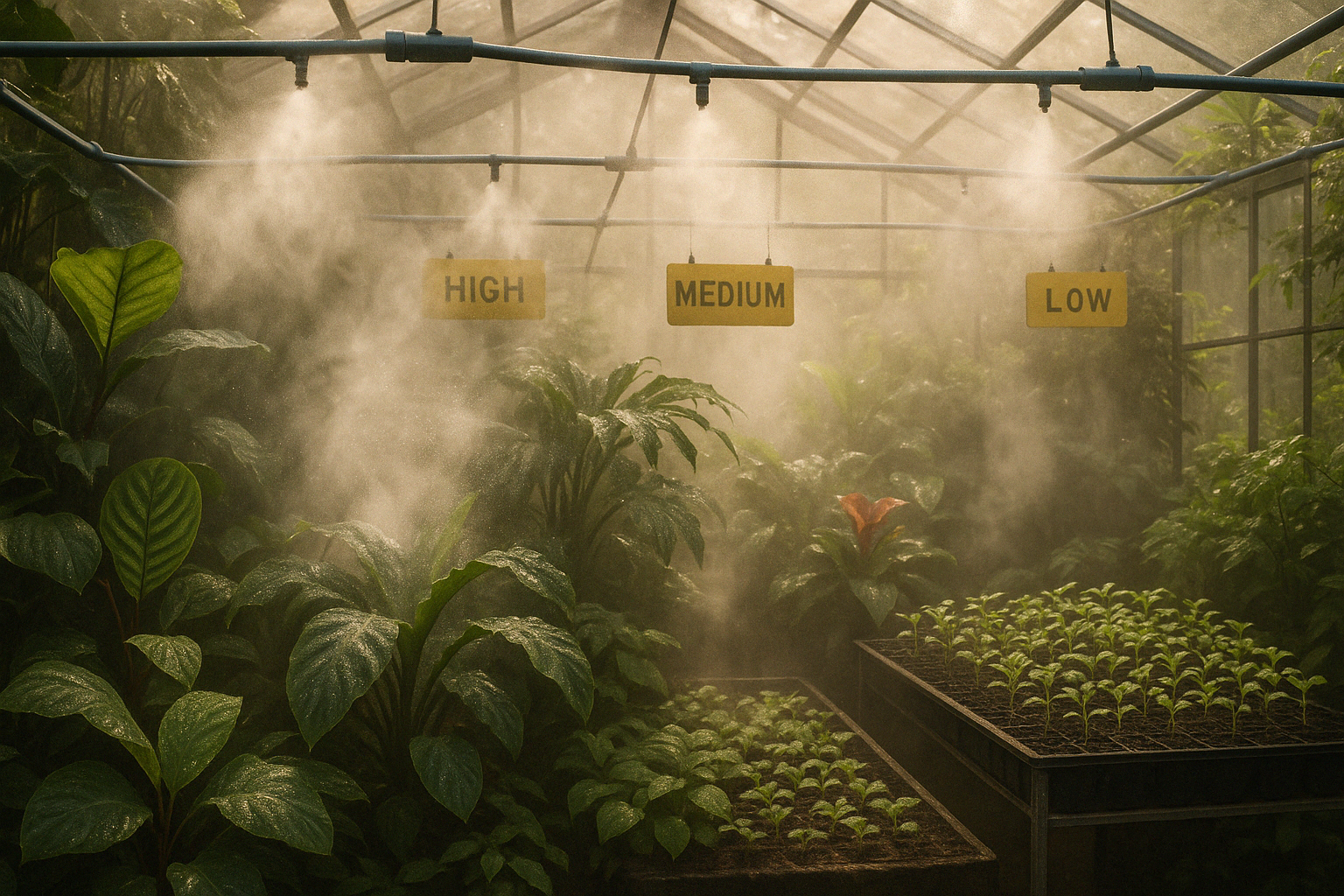
Your tropical plants and seedlings will thrive with higher humidity levels between 70-90%. For these moisture-lovers, set up more frequent misting cycles with a higher density of nozzles producing finer droplets. It's like creating their own personal rainforest microclimate.

On the flip side, if you're growing succulents or other drought-tolerant plants, they'll prefer humidity levels around 30-50%. For these plants, reduce your misting frequency and space your nozzles further apart. These desert dwellers appreciate a lighter touch when it comes to overhead moisture.

"We've divided our greenhouse into three zones with independent misting controls," shared a commercial grower from Miami. "This allows us to grow tropical ornamentals, seedlings, and market vegetables all under one roof with optimized conditions for each."

Your greenhouse size will also influence your setup. For small hobby greenhouses under 200 square feet, a simple system with 5-10 nozzles and manual timers might be all you need. As you scale up to medium-sized spaces (200-1000 square feet), consider adding multiple zones and automated controls to fine-tune your growing environment.

Large commercial operations really benefit from fully automated systems with humidity sensors that take the guesswork out of the equation. These sophisticated setups can integrate with climate control computers and feature multiple zones with independent controls.

The wonderful thing about these systems is their scalability. You might start with just 5 misters for your small greenhouse, but the system can grow with you, expanding to accommodate 40 misters or more as your operation expands.

For those with rolling benches, consider bench-mounted systems using aluminum risers and flexible connections. This clever setup allows your misting system to move right along with the bench, maintaining consistent coverage even when you rearrange your greenhouse layout.

Installation and Maintenance Tips

Installing your misting systems for greenhouses doesn't require an engineering degree, but a bit of care during setup will save you countless hours of troubleshooting later. Think of it as planting a garden—proper preparation leads to better results.

Start with your water supply. Installing a quality filter system is non-negotiable if you want to prevent those tiny nozzle openings from clogging. If your water pressure exceeds 70 psi (which is common in many municipal systems), add a pressure regulator to protect your components. Don't forget a backflow preventer—it's not just good practice, it's often required by local codes.

When mounting your system, aim for stability and levelness. For bench-mounted setups, place aluminum risers about every 12 feet. If you're going with a ceiling-hung system, use sturdy chain or cable that won't sag over time. Water always finds the lowest point, so keeping your tubing level ensures even distribution.

For standard coverage, punch holes in your tubing about every 30 inches. A neat trick from the pros: alternate your nozzle spray patterns between downward and outward for more even distribution. Anti-drip nozzles are worth the extra investment—they prevent water waste and keep your plants from getting uneven moisture.

"Always verify that all parts fit together properly and double-check measurements before proceeding with installation," advises a greenhouse installer with over twenty years of experience. "This simple step prevents numerous headaches later on."

Once installed, your system needs regular attention to keep performing at its best. Make monthly inspections part of your routine—check for clogged nozzles, inspect tubing for leaks or damage, and verify your filter is still doing its job.

Quarterly, take a deeper dive with seasonal maintenance. Flush the entire system to remove mineral buildup (especially important if you have hard water), check and adjust pressure settings, and inspect electrical components and connections. This is also a good time to update your timer or controller settings to match seasonal changes.

If you live somewhere with freezing winters, don't forget to winterize your system. Drain it completely before temperatures drop below freezing, disconnect sensitive components and store them indoors, and protect any exposed tubing from UV damage during the off-season.

Water quality can make or break your system's performance. Our patented micro-jet nozzle technology at Cool-Off is designed to resist clogging, but even the best nozzles need clean water to function properly. If you have particularly mineral-rich water, consider testing it periodically and treating as needed.

Integrating Misting Systems with Other Environmental Controls

Your misting systems for greenhouses shouldn't operate in isolation—they work best as part of a coordinated environmental symphony. When properly integrated with other systems, the results can be truly remarkable for plant health and productivity.

Ventilation and misting go hand-in-hand like sunshine and plants. Position your fans to improve mist distribution without creating excessive drift that wastes water. When these systems work together, you maintain ideal humidity levels while ensuring good air circulation that prevents disease.

Shading solutions make perfect partners for misting systems. External shade cloth (typically 30-50% UV block) works synergistically with misting to reduce heat load during the hottest parts of the day. Many growers find that this combination allows them to grow through summer months that would otherwise be too challenging.

During cooler seasons, you'll need to coordinate your misting with heating systems. It might seem obvious, but you'd be surprised how many greenhouse operators have their heating and cooling systems fighting each other! Integrated controls prevent this conflict and save energy in the process.

"The most successful operations view their greenhouse as an ecosystem where all environmental controls work together rather than competing systems," notes a greenhouse technology specialist with a knack for simplifying complex concepts.

Today's modern control systems make this integration easier than ever. Temperature sensors can trigger misting when temperatures rise above your set threshold, while humidity sensors prevent over-misting that could lead to disease issues. Light sensors can coordinate shading and misting based on solar intensity, creating truly responsive growing environments.

For serious growers, programmable logic controllers (PLCs) allow for sophisticated environmental recipes custom to specific crops. These systems can be programmed with different day/night settings and custom programs for different growth stages. Many even offer mobile monitoring and control, giving you peace of mind even when you're away from your greenhouse.

A commercial grower in Scottsdale shared their experience: "We've integrated our Cool-Off misting system with our climate control computer. The system now automatically adjusts misting frequency based on outside temperature, internal humidity, and even the growth stage of our crops. The difference in plant quality has been remarkable."

At Cool-Off, we design our systems with this kind of integration in mind. Our components play well with standard greenhouse control systems, and our technical team is always happy to provide guidance on integrating our misting systems with your existing setup. After all, the best greenhouse environment is one where all systems work together in perfect harmony.

Overcoming Challenges and Best Practices

Let's be honest – while misting systems for greenhouses can work wonders for your plants, they aren't completely foolproof. Like any technology, they come with their own set of challenges. The good news? With a little know-how and regular attention, you can sidestep most common issues and keep your system running beautifully for years.

Water quality tends to be the number one troublemaker for greenhouse misting systems. Those tiny minerals in your water might seem harmless, but over time, they can build up and clog those precision nozzles. I've seen perfectly good systems reduced to a trickle because no one bothered to install a basic filtration system. A simple inline filter can save you hours of maintenance headaches down the road.

"I spent more time unclogging nozzles than tending to my plants until I finally installed a proper water filter," confessed one of our customers in Arizona. "Now I barely think about my misting system – it just works."

Humidity management presents another balancing act. Too little, and your plants suffer; too much, and you're creating a paradise for fungal diseases. This is where proper ventilation becomes your best friend. Think of ventilation and misting as dance partners – they need to work together in perfect harmony. Many successful greenhouse operators coordinate their fans to run shortly after misting cycles, creating ideal moisture levels without the dampness that fungi love.

Uneven coverage is another common frustration. You might notice some areas of your greenhouse turning into mini rainforests while others remain parched. This usually comes down to improper nozzle spacing or pressure issues. Taking time during installation to properly space nozzles (typically every 30 inches) and alternating spray patterns can prevent this problem entirely.

For system pressure, think of Goldilocks – not too high, not too low, but just right. Most standard misting systems perform best between 15-70 psi. If your pressure falls outside this range, consider adding a regulator to keep things consistent. Your plants will thank you with healthier growth and your nozzles will deliver that perfect misty spray instead of dripping or blasting.

Maximizing the Effectiveness of Misting Systems for Greenhouses

One thing many greenhouse owners find is that climate matters – a lot. Your location plays a huge role in how your misting systems for greenhouses perform and how you should configure them.

misting system in different climate settings - misting systems for greenhouses

If you're in Phoenix, Las Vegas, or other arid regions, you've hit the jackpot for misting efficiency. The dry air allows for maximum evaporative cooling – those temperature drops of up to 30°F aren't just marketing talk, they're reality in dry climates. In these regions, your system can run shorter, more frequent cycles for optimal cooling. The water evaporates quickly, cooling the air without creating excessive humidity.

"Our misting system is our lifeline during Arizona summers," shares a tomato grower from Phoenix. "Without it, we couldn't grow anything from May through September. But we've learned to adjust our cycles with the seasons – what works in June would create a swamp by October."

On the flip side, if you're in naturally humid areas like Florida or the Gulf Coast, your approach needs adjustment. The already moisture-laden air means you'll see less dramatic cooling effects. In these regions, focus more on gentle plant hydration rather than expecting major temperature drops. Consider running your system less frequently but ensuring good air circulation to prevent disease issues.

Those of you in variable climates like Dallas or Sacramento face a different challenge – your system needs to adapt to dramatic seasonal changes. This is where automated controls really earn their keep. A system that can adjust based on temperature and humidity sensors rather than fixed timers will save you countless headaches and plant problems throughout the year.

Regardless of your climate, refining your cycle timing can make a world of difference. Many greenhouse owners are surprised to learn that shorter, more frequent misting cycles (think 10-15 seconds every 5-10 minutes during hot periods) often outperform longer, less frequent ones. This approach maintains humidity without creating the constant wetness that can lead to disease.

The placement of your nozzles deserves careful thought too. Propagation areas might benefit from higher nozzle density, while mature plants can thrive with more spaced-out coverage. And please, take the time to position nozzles away from walkways and electrical components – this simple step prevents both safety hazards and annoyed visitors.

Preventing Disease and Mold

Let's tackle the elephant in the greenhouse – disease risk. While misting systems for greenhouses create wonderful growing environments for your plants, they can unfortunately do the same for fungi and bacteria if not properly managed.

Finding the sweet spot for humidity is essential. For most plants, aim to maintain relative humidity between 50-70%. This range provides enough moisture for healthy growth without creating a petri dish for pathogens. When humidity consistently creeps above 85%, you're entering the danger zone for many fungal diseases.

Air movement is your secret weapon in disease prevention. Still, stagnant air creates perfect pockets for disease development, even at lower humidity levels. Horizontal airflow fans that keep air gently circulating throughout your greenhouse can dramatically reduce disease pressure. They're not expensive, but their impact is enormous.

"The combination of proper misting and good air circulation has cut our fungicide use by more than half," notes an orchid grower from Florida. "The plants are healthier, and we're spending less on chemicals. It's a win-win."

Timing your misting cycles properly makes a huge difference too. One rule I always share with new greenhouse owners: avoid late-day misting whenever possible. Plants that remain wet overnight are much more susceptible to disease. Morning or early afternoon misting gives foliage time to dry before temperatures drop in the evening.

Different plants have different moisture needs, of course. Seedlings and cuttings generally require higher humidity levels to thrive, but they're also more vulnerable to damping-off and other moisture-related diseases. For these delicate youngsters, consider bottom heat to promote healthy transpiration while maintaining the humidity they need.

Mature plants typically tolerate (and often prefer) lower humidity levels. For crops particularly prone to fungal issues – I'm looking at you, tomatoes and roses – consider a hybrid approach. You might use drip irrigation for direct watering while employing minimal misting just for atmospheric control.

Water quality plays a surprisingly important role in disease prevention too. Even municipal water can harbor plant pathogens or beneficial bacteria that become problematic in the warm, moist environment of a greenhouse. For larger operations, UV treatment or similar water purification methods can be worth the investment.

Energy and Water Conservation Tips

Making the most of every drop of water and kilowatt of electricity isn't just good for your wallet – it's good stewardship. Fortunately, misting systems for greenhouses can be remarkably efficient when properly designed and operated.

The nozzles you select make a tremendous difference in water efficiency. Our patented micro-jet nozzle technology at Cool-Off is specifically designed to create optimal droplet sizes that provide effective cooling while minimizing water usage. These precision nozzles ensure water goes exactly where it's needed without waste.

Zone-based watering represents another powerful conservation strategy. Not everything in your greenhouse needs the same amount of moisture at the same time. By dividing your greenhouse into zones based on plant types, sun exposure, or growth stages, you can target water precisely where it's needed instead of taking a one-size-fits-all approach.

"After implementing zones in our greenhouse, we cut water use by nearly 30%," shares a commercial herb grower. "Different herbs have dramatically different water needs, and our zoned misting system lets us accommodate those differences without wasting resources."

Smart controls have revolutionized greenhouse efficiency. Modern systems can incorporate soil moisture sensors, external weather stations, and humidity monitors to make real-time adjustments to your misting schedule. These systems might cost more upfront, but they typically pay for themselves quickly through resource savings.

For energy efficiency, pump selection deserves careful consideration. An oversized pump wastes electricity, while an undersized one strains to keep up and may fail prematurely. Most home greenhouse owners find that a 1/4 to 1/2 HP pump hits the sweet spot – powerful enough for consistent pressure while using just 250-400 watts per hour of operation.

Pressure optimization not only improves system performance but saves energy too. Operating at the lowest effective pressure for your specific nozzles reduces pump strain and energy consumption. For longer greenhouse runs, pressure-compensating nozzles ensure that plants at the far end of the line receive the same gentle misting as those near the pump.

To put water usage in perspective, a typical system with 10 nozzles operating for a total of 30 minutes daily uses approximately 144 gallons. That might sound like a lot, but it's actually quite efficient compared to traditional irrigation, especially when you consider the dual benefits of both watering and cooling.

For those looking to push efficiency even further, consider timing your system operation during off-peak electricity hours when possible, or explore solar-powered options that align perfectly with the sunniest (and typically hottest) parts of the day when misting is most needed.

At Cool-Off, we've helped countless customers create systems that maximize efficiency without compromising plant health. Our experience shows that thoughtful system design paired with regular maintenance creates the perfect balance of performance and conservation – keeping both your plants and your utility bills in the green.

Conclusion

Creating the perfect growing environment is an ongoing challenge for greenhouse owners. Misting systems for greenhouses offer a remarkably effective solution to this challenge, providing precise control over both temperature and humidity – the two most critical factors for plant success.

Throughout this guide, we've explored the many ways these versatile systems can transform your greenhouse operation. From delicate seedling propagation to maintaining mature plants during scorching summer days, a well-designed misting system delivers benefits at every stage of the growing cycle.

The beauty of greenhouse misting lies in its neat simplicity. By creating a fine spray of water droplets that evaporate in the air, these systems can reduce temperatures by up to 30°F while simultaneously providing the gentle moisture many plants crave. This dual functionality makes misting one of the most efficient climate control options available to greenhouse growers today.

What makes these systems truly special is their adaptability. Whether you're tending to a small hobby greenhouse or managing a large commercial operation, misting systems can be customized to meet your specific needs. The same core technology works for tropical orchids in Florida, desert succulents in Arizona, and seasonal vegetables in the Midwest – it's all about proper system design and operation.

The efficiency gains from properly implemented misting systems shouldn't be overlooked. Using just a fraction of the water required by traditional irrigation and a small fraction of the energy consumed by air conditioning, these systems represent a win for both your operating budget and environmental sustainability.

For optimal results, misting works best as part of an integrated approach to greenhouse management. When coordinated with proper ventilation, strategic shading, and appropriate heating systems, misting creates a harmonious growing environment that maximizes plant health and productivity.

Of course, like any system, maintenance matters. Regular attention to nozzles, filters, and pressure settings ensures your misting system continues to perform optimally season after season. The small time investment in system care pays tremendous dividends in plant quality and system longevity.

As climate challenges become more pronounced worldwide, the controlled environment that misting systems provide becomes increasingly valuable. Whether you're fighting extreme heat, managing variable conditions, or simply striving for consistent growing results, a properly designed misting system offers a powerful solution.

At Cool-Off, we're passionate about helping greenhouse owners create these optimal growing environments. Our patented micro-jet nozzle technology delivers superior cooling while minimizing water usage, and we're proud to offer free shipping nationwide on our complete line of misting products.

Whether you're propagating delicate cuttings or growing heat-sensitive crops during summer months, we have misting solutions designed for your specific conditions. Reach out today to find how our systems can transform your greenhouse environment and help your plants thrive from seedling to harvest.

Frequently Asked Questions

What is the ideal water pressure for a patio mister?

What is the ideal water pressure for a patio mister?

What is the ideal water pressure for a patio mister?